Tax Accountant Perth | Best Tax Accountant in Perth | Tax Return PerthTax Accountant Perth | Best Tax Accountant in Perth | Tax Return Perth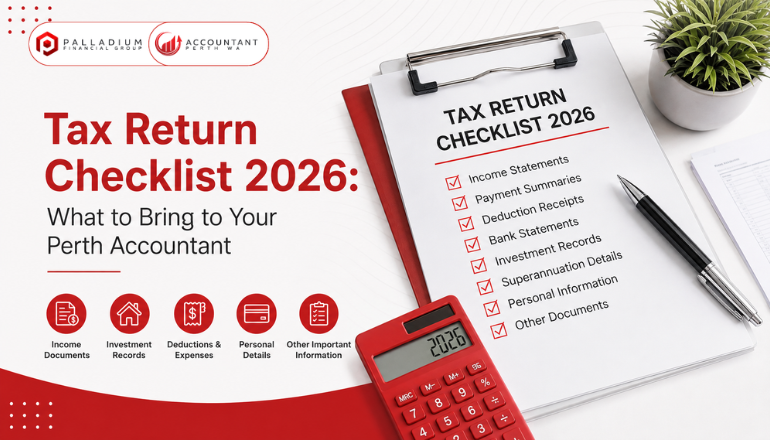
Preparing your tax return does not have to be stressful. The easiest way to make the process smoother is to gather your records before your appointment. Having the right paperwork ready can help your accountant identify eligible deductions, avoid missing income and reduce unnecessary back-and-forth.
If you are preparing your Australian tax return in 2026, this guide explains exactly what to bring, what documents may apply to your situation and what you should check before meeting your accountant.
Many taxpayers arrive at their appointment with only their income statement and assume that is enough. In reality, your tax return can involve much more than salary or wages.
The accountant might require information on employment costs, private health insurance, investments, rental property, superannuation, foreign income, and other financial activities.
Preparing your records ahead of time will allow your accountant to better understand what went on in your financial year. This will also make your meeting more effective since less time will be wasted looking for missing information.
If you are looking for an accountant in Perth, having your documents organised can also make the initial consultation easier.
The documents you need will depend on your income and personal circumstances. However, most Australian taxpayers should start with the following records.
Your accountant needs to know about all taxable income received during the financial year.
Bring or provide details of:
Your income statement is generally available through myGov, but it is still useful to check that the information is complete and accurate.
Work-related expenses can sometimes reduce your taxable income when they meet the relevant Australian Taxation Office requirements.
Depending on your occupation, you may need records for:
Do not assume that every expense is deductible. Your accountant can determine whether an expense meets the applicable rules and whether private use needs to be excluded.
If you have private hospital cover, keep your private health insurance statement available.
It can contain information needed to complete the Medicare levy surcharge and private health insurance sections of your return.
In many cases, the information may already be available electronically, but checking your records can help identify discrepancies.
If you have investments, your documents should go beyond ordinary bank statements.
Provide relevant records for:
Keep your original purchase information where possible. For capital gains calculations, your accountant may need the purchase date, purchase price, transaction costs and sale details.
In case you hold some stocks or investments, you will not need the services of a property investment accountant, but an accountant with experience in investment tax accounting can assist in making sure that appropriate records are taken into consideration.
Property owners often have more paperwork than ordinary salary earners.
For a rental property, prepare:
It is particularly important to distinguish between repairs, maintenance and capital improvements because they may receive different tax treatment.
If you purchased a property during the year, include settlement documents and relevant acquisition costs.
If you operate a sole-trader business, side business or freelance activity, your accountant will generally need more detailed financial information.
Prepare:
Keeping business and personal transactions separate throughout the year can make tax preparation considerably easier.
Australians who have lived, worked or earned income overseas may have additional reporting requirements.
If you are an Australian tax resident with overseas financial interests, provide:
If you have recently moved overseas or returned to Australia, provide the dates you left or returned and details about your residency circumstances.
An expat tax accountant can be useful when your tax affairs involve both Australian and overseas income.
A common question is, “What documents do I need for tax return preparation?”
The answer depends on your circumstances, but you should keep evidence supporting every deduction you intend to claim.
Useful records include:
Digital copies are usually much easier to organise than piles of paper. Consider creating folders for income, work expenses, investments, property and other deductions.
Your accountant should know about major changes during the financial year, even if you are unsure whether they affect your tax return.
Tell them if you:
Providing this information early can help your accountant ask the right follow-up questions.
Do not delay your tax appointment simply because you cannot find one document.
First, check your myGov account, online banking, employer records, property manager statements and investment platforms. You may also be able to request replacement documents from your employer, insurer, bank or other provider.
Tell your accountant which records are missing. They can advise whether the information can be obtained another way or whether you should wait before lodging the return.
Avoid estimating expenses simply because you cannot find a receipt. Good record-keeping is important when claiming deductions.
A few minutes of preparation can make your meeting much more useful.
Consider asking:
If you are concerned about tax accountant cost, ask for the expected fee and what is included before work begins. Professional fees can vary depending on the complexity of your return and the amount of work required.
Before meeting your accountant, run through this quick list:
This simple tax return checklist can help you arrive at your appointment prepared and reduce the chance of overlooking important information.
A properly completed tax return begins with the correct preparation of one’s records. It is not necessary for you to know all the details of tax law, however you should have enough information to allow your accountant to determine your tax position.
Regardless whether you are an employee, an investor, a property owner, a business operator or an Australian with foreign income sources, having your records in hand prior to your appointment can save time and ensure an easier process for completing your tax return.
In case there is any doubt about your records, it is not wise to overlook any document since it might be deemed unimportant. Rather, it is safer to bring any documentation regardless of whether it seems unimportant.
A complete tax return checklist is therefore less about collecting every piece of paper you own and more about preparing the right evidence for your particular circumstances.