Tax Accountant Perth | Best Tax Accountant in Perth | Tax Return PerthTax Accountant Perth | Best Tax Accountant in Perth | Tax Return Perth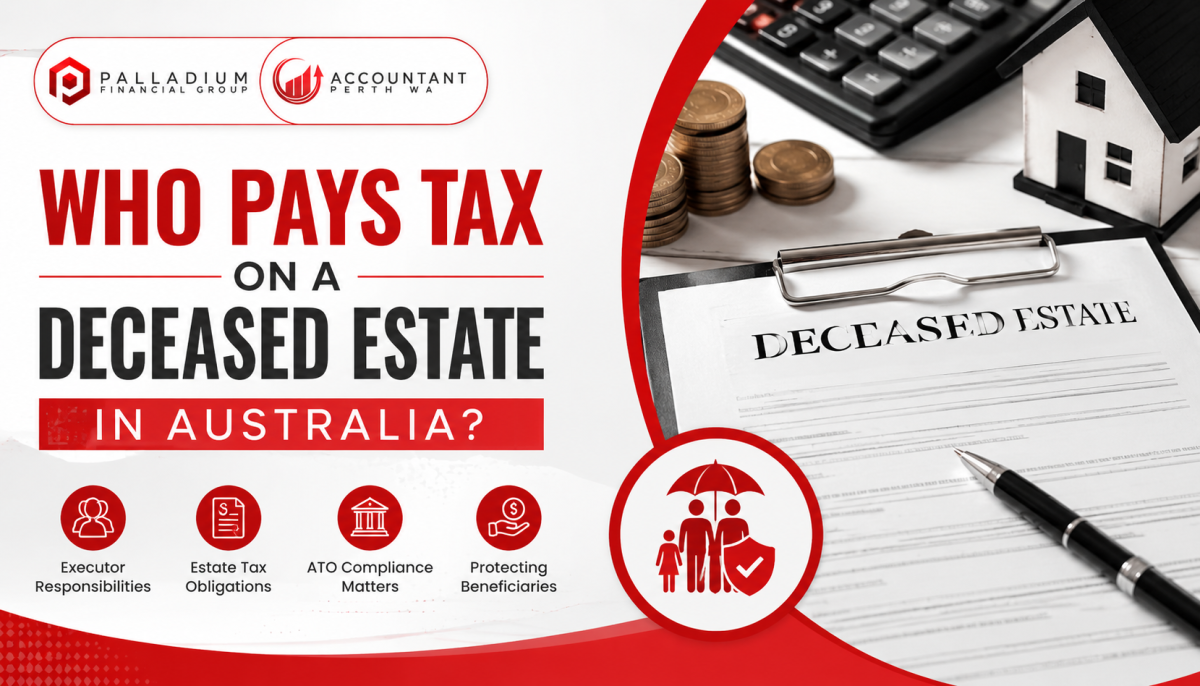
When someone we care about passes away the people they leave behind have to deal with a lot of things. They have to plan a funeral and take care of documents. They also have to think about money and taxes. A lot of people want to know if they still have to pay taxes after someone dies. They also want to know who is supposed to pay these taxes. The family members have to figure out the tax situation after someone dies. Taxes are still something that has to be taken care of after someone passes away.
When a family member passes away, tax is usually the last thing anyone wants to think about. Most people are focused on supporting loved ones, organising the funeral, and dealing with legal paperwork. It’s often only later that questions start coming up about bank accounts, investment properties, shares, and whether any tax still needs to be paid.
The answer may surprise you.Australia does not have an inheritance tax. When someone dies their estate can still have financial and tax duties. These need to be sorted out before anyone gets any assets. The estates financial and tax responsibilities must be taken care of. This has to happen before assets are passed on to beneficiaries.
When someone dies the family has to deal with the estate. The family will probably have a lot of questions, about taxes. They will want to know what to do with tax returns after the person has died. This is especially true if the person who died had investments, rental properties or share portfolios that’re still active. The family will have to figure out what to do with these things and how to handle the tax returns for them.
A deceased estate consists of the assets, investments, property, and financial interests a person leaves behind after death, along with any outstanding debts or liabilities. These assets are managed by the executor or administrator until all obligations are settled and the remaining assets are distributed to beneficiaries.
A deceased estate generally begins from the date of death. From that point forward, any income generated by estate assets is treated separately from the deceased person’s personal income.
For example, if an investment property continues earning rent after the owner’s death, that rental income may belong to the estate rather than the deceased individual.
The person, in charge of the estate is usually the executor who is named in the will.
If someone does not have a will the court may choose an administrator to do the same kind of work.
The job of the executor or the administrator includes finding all the assets that belong to the estate paying off debts taking care of taxes talking to the people who will get something from the estate and giving out the estate according to what the law says.
One of the most misunderstood areas of estate administration is taxation. While inheritance itself is generally not taxed in Australia, a deceased estate may still have ongoing reporting and payment obligations.
These deceased estate tax obligations can arise when:
The complexity of these obligations often depends on the size of the estate and the nature of the assets involved.
Some estates can be finalised within a few months, while others may remain under administration for several years.
Although the estate itself is responsible for paying any tax owed, the executor or administrator is responsible for managing the process.
Being named as an executor is often seen as an honour, but it also comes with responsibilities that many people don’t expect. Apart from dealing with banks, government agencies, and legal documents, the executor may also need to sort out unfinished tax matters. In simple terms, they’re the person responsible for making sure the estate’s financial affairs are wrapped up properly before any inheritance is distributed.
This responsibility often involves gathering financial records, identifying sources of income, and determining whether tax returns need to be lodged.
Many executors seek guidance from a tax accountant perth professional before making major decisions involving estate assets.
Executors cannot simply distribute assets as soon as they gain access to them. Before beneficiaries receive their inheritance, all known debts and liabilities should be addressed.
If assets are distributed too early and tax liabilities are later discovered, the executor may face personal liability in some situations.
This is one reason why estate administration should never be rushed.
The tax requirements of a deceased estate depend on its circumstances. In many situations, two separate tax returns may be needed after a person’s death—one for the deceased individual and another for the estate if it continues to earn income.
The deceased person’s final tax return covers income earned from the start of the financial year until the date of death.
This may include:
The return effectively closes the individual’s personal taxation affairs.
If the estate earns income after death, it may need to lodge a separate deceased estate tax return.
This commonly applies where assets remain active during administration.
Examples include:
In some cases, multiple returns may be required if the administration process spans several financial years.
Whether income earned after death needs to be reported depends on the type of income and how the estate is being administered. Certain earnings, such as rent, interest, or dividends, may create tax reporting obligations for the estate.
Rental properties are one of the most common sources of estate income.
If rent continues to be collected during administration, it generally forms part of the estate’s assessable income.
Expenses associated with maintaining the property may also be deductible.
Even a simple savings account can generate taxable income after death.
Interest earned while funds remain under estate control may need to be included in estate reporting.
Many Australians hold shares and managed investments that continue generating returns after death.
These distributions are generally treated as estate income until ownership is transferred to beneficiaries.
When preparing deceased estate financial records, investment income is one of the areas most commonly overlooked by inexperienced executors.
Capital gains tax can arise when estate assets are sold.
The treatment depends on several factors, including:
Property sales often require particular attention because capital gains rules can be complex.
Australian tax law provides special treatment for deceased estates during the administration period. This recognises that executors require time to gather assets, settle liabilities, and distribute inheritances.
For a limited period, deceased estates may receive concessional tax treatment that differs from standard trust arrangements.
These concessions can provide valuable flexibility while administration is ongoing.
Once administration has effectively concluded, normal trust taxation rules may begin to apply.
The timing varies depending on the circumstances of the estate.
Understanding these deceased estate tax obligations becomes increasingly important where administration extends over multiple years.
Many executors are surprised to learn that Deceased Estate Tax Returns may still be required even after some assets have already been distributed.
One of the most common concerns beneficiaries have is whether they will be taxed on their inheritance.
Fortunately, Australia does not generally impose tax simply because someone receives an inheritance.
Beneficiaries can usually receive:
without paying inheritance tax.
The situation can be different where beneficiaries become entitled to income generated by estate assets.
Depending on the circumstances, certain distributions may need to be reported in a beneficiary’s personal tax return.
Once ownership transfers, any future income generated by the asset usually becomes taxable to the beneficiary.
For example, rental income from an inherited property would generally be declared by the new owner.
Executors often use a deceased estate tax return checklist to ensure reporting obligations are addressed before assets are transferred.
Estate administration can be challenging, particularly for people with no prior experience.
One mistake that catches many executors off guard is distributing money too quickly. After all, beneficiaries are often waiting for the estate to be finalised, and there’s usually pressure to move things along. However, if tax liabilities or outstanding debts appear later, fixing the situation can become difficult and stressful.
Tax deadlines continue to apply after death.
Failure to lodge required returns can result in penalties and unnecessary complications.
Interest, dividends, and other investment earnings are frequently forgotten.
Although individual amounts may seem insignificant, they can still create reporting requirements.
Accurate records are essential throughout the administration process.
Executors should maintain documentation relating to:
For many families, the cost to hire tax accountant services is far lower than the expense of correcting avoidable errors later.
The duration varies from one estate to another.
A straightforward estate may be finalised within several months, while more complex matters can take years.
Tax responsibilities generally continue while the estate remains active and capable of generating income.
Rental properties, investments, and business interests can all create ongoing reporting requirements.
Once liabilities are paid and assets transferred, tax obligations generally reduce significantly.
However, final reporting requirements may still need to be completed.
Before formally closing the estate, executors should ensure all deceased estate tax obligations have been satisfied.
This helps minimise the risk of future disputes or compliance issues.
Estates involving overseas assets or beneficiaries may also require specialist consideration regarding expat tax filing requirements.
Managing an estate can be emotionally draining, especially when complex financial matters are involved.
Professional advice can help executors understand their responsibilities and avoid common mistakes.
Professional advisers can assist with:
This can be particularly valuable when the estate includes substantial assets.
Tax laws can be difficult to interpret without experience.
Seeking advice early often helps prevent delays and unnecessary complications later in the process.
Families dealing with complex estates frequently engage a Deceased Estate accountant perth specialist to assist with reporting requirements and estate administration.
Where overseas assets, foreign income, or international beneficiaries are involved, support from an expat tax accountant perth may also be beneficial.
Every deceased estate is different. Some can be finalised relatively quickly, while others involve months or even years of administration. What remains consistent is the importance of getting the financial side right. Taking the time to understand tax responsibilities, keep accurate records, and seek advice when needed can save a great deal of stress later on.
For executors, the goal isn’t simply to distribute assets it’s to ensure the estate is managed properly and that beneficiaries receive their inheritance without unexpected tax issues arising in the future.