Tax Accountant Perth | Best Tax Accountant in Perth | Tax Return PerthTax Accountant Perth | Best Tax Accountant in Perth | Tax Return Perth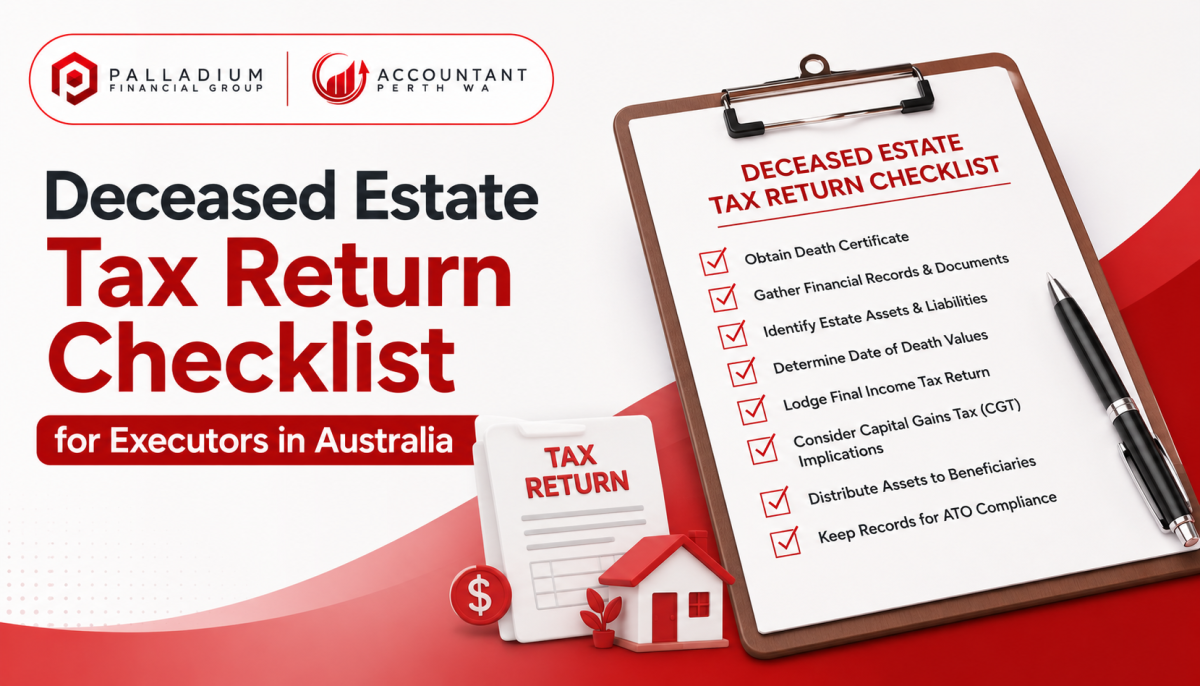
Losing a family member is never easy. Along with the emotional stress, executors are often left handling legal and financial responsibilities they may have never dealt with before. One of the biggest challenges is managing tax obligations connected to the deceased estate.
Many people think estate administration only involves distributing assets to beneficiaries, but there is much more involved behind the scenes. Executors may need to lodge tax returns, deal with capital gains tax, report investment income, and communicate with the Australian Taxation Office (ATO).
Without proper planning, it is easy to miss important deadlines or make reporting mistakes that can delay the estate process. That is why having a clear Deceased Estate Tax Return Checklist is important for executors in Australia.
This guide explains the key steps executors should follow to stay organised and manage estate tax obligations correctly.
A deceased estate is created when someone passes away and leaves assets or financial interests that need to be managed before distribution to beneficiaries.
The estate may include:
After the date of death, the estate may continue earning income. In many cases, the ATO treats the estate as a separate taxable entity.
This means executors may need to:
For simple estates, the process may be straightforward. However, estates involving property, investments, or trusts often become more complicated.
The executor named in the will is generally responsible for managing the estate. If there is no will, the court may appoint an administrator.
Executors are usually responsible for:
Many executors are unfamiliar with tax rules and ATO requirements. Because of this, professional guidance can make the process much easier.
Working with a Deceased Estate accountant can help executors avoid unnecessary mistakes and stay compliant throughout the administration process.
Estate administration involves many moving parts. Executors often need to manage paperwork, deadlines, and financial reporting while also supporting grieving family members.
A proper checklist helps executors:
It also makes it easier to track:
Without a structured process, small mistakes can create bigger problems later.
Getting organised early can save a lot of time and stress later in the process.
The death certificate is required for:
Executors should keep several certified copies available.
The will outlines how the estate should be distributed.
Executors should secure:
These documents provide legal authority to manage the estate.
Executors should collect:
Complete financial records help ensure income is reported correctly.
Date-of-death valuations are important for:
These valuations are often needed later for capital gains tax calculations.
The deceased person’s final individual tax return covers income earned from 1 July until the date of death.
Executors should gather:
These amounts may still need to be included in the final return.
Executors should review:
Missing investment income is a common issue during estate administration.
If the deceased owned investment property, executors should collect:
Keeping detailed records helps avoid future reporting issues.
Eligible deductions may still apply in the final return, including:
Reviewing deductions properly may help reduce unnecessary tax liabilities.
Once the individual passes away, future income generated by estate assets may need to be reported separately.
If the estate earns income, executors usually need to apply for a separate TFN for the estate.
This may be required for:
Estate income can include:
Executors must report this income correctly until the estate is fully administered.
Many families seek help from a tax accountant perth professional when dealing with ongoing estate income and tax compliance.
Capital gains tax is one of the more complicated parts of estate administration.
CGT may apply when:
Executors should keep:
Families often seek advice on how to save on capital gains tax before selling inherited assets.
Executors should maintain records relating to:
Good record keeping helps beneficiaries manage their own tax obligations correctly.
Many executors underestimate how detailed estate tax administration can become.
Common mistakes include:
Executors should also understand that tax returns after death may continue for several years if the estate remains active.
Avoiding common tax return mistakes early can prevent major problems later.
Australia does not charge inheritance tax, but capital gains tax may still apply when inherited assets are sold.
CGT commonly affects:
Some exemptions may apply, especially involving the deceased person’s main residence.
Executors should review:
Professional advice is often worthwhile before selling inherited assets.
The ATO has specific rules for deceased estates that executors should understand.
Important areas include:
The ATO may review estates where reporting appears incomplete or inconsistent.
Keeping accurate records throughout the administration process is essential.
Some estates are relatively simple, while others involve:
Professional accountants can assist with:
Families often work with personal tax accountants perth professionals when estate administration overlaps with broader financial matters.
Understanding the cost to hire a tax accountant early can also help executors plan for professional support during the administration process.
Complex trust structures may require guidance from a trust tax accountant experienced in estate taxation.
Executors can make the process smoother by:
Good preparation helps reduce stress and prevents unnecessary delays.
Managing a deceased estate involves much more than distributing assets to family members. Executors are also responsible for handling tax returns, estate income, capital gains obligations, and ongoing ATO compliance requirements.
A clear Deceased Estate Tax Return Checklist can help executors stay organised and manage the process more confidently. From gathering records to reporting estate income and handling CGT matters, every step requires careful attention.
Because estate taxation can become complex very quickly, many families choose professional accounting support to ensure everything is managed correctly. Proper guidance and accurate reporting can help executors finalise estates more efficiently while reducing future tax risks for beneficiaries.